
CASE STUDY
Reimagining an Informed Consent Form

WHY IS THIS IMPORTANT?
The Informed Consent Form (ICF) is a fundamental part of the clinical trial experience. It explains what the study is about, the possible risks and benefits, and what participation involves. Because it includes so much information, ICFs have traditionally been long, text-heavy, and difficult for many potential participants to understand.
Our Challenge
The Informed Consent Form contains dense text and complex medical terminology.
Medical jargon, detailed risk explanations, legal language, and procedural descriptions can be overwhelming—especially when patients are already experiencing stress or uncertainty in their treatment journey. Because of this, we continue searching for better ways to support study participants as they consider clinical trials. Using the UPL, we reimagined how information is communicated throughout our ICF.


COLLABORATING TO APPLY UPL
Working Together to Redesign the Informed Consent Form.
We held a hands-on Co-creation session with former clinical trial participants, caregivers, healthcare professionals, bioethicists, visual communication experts, and Institutional Review Board directors. Together, we reviewed our existing ICFs, identified opportunities to simplify complex information, and applied a UPL lens to develop a prototype of a redesigned ICF and supporting materials.
We then validated the Prototype with a new group of former participants and refined it further to create a final UPL-informed consent approach.
Our Output
See how we applied the UPL to reimagine the Informed Consent Form and supporting materials.
It was critical that our solution be versatile. We created a "Role Model UPL-ICF"—a flexible template that allows teams to adapt the form for any specific clinical trial while maintaining UPL standards. We supported this template with new materials designed to guide the patient through the process.
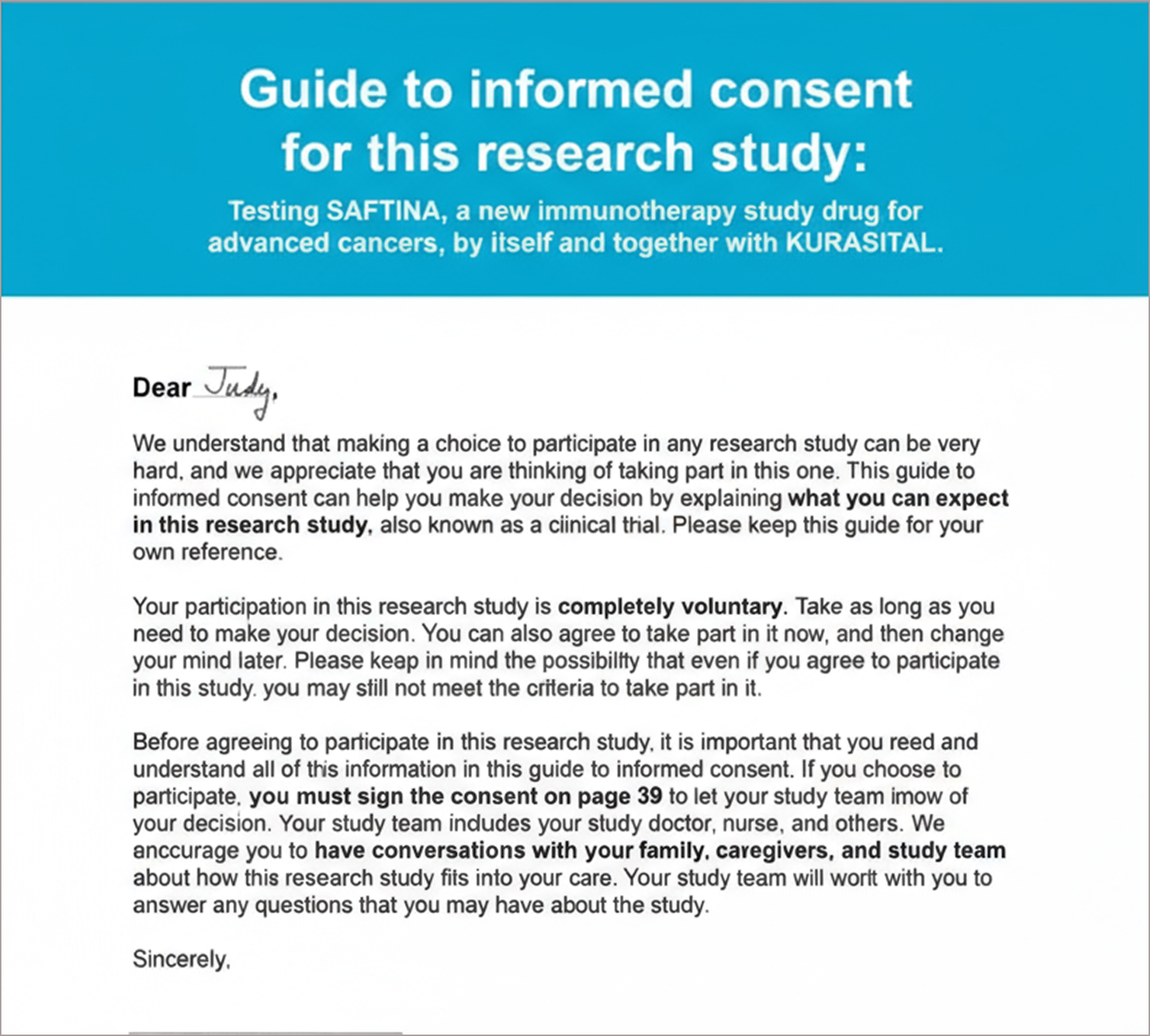
Communicate Visually
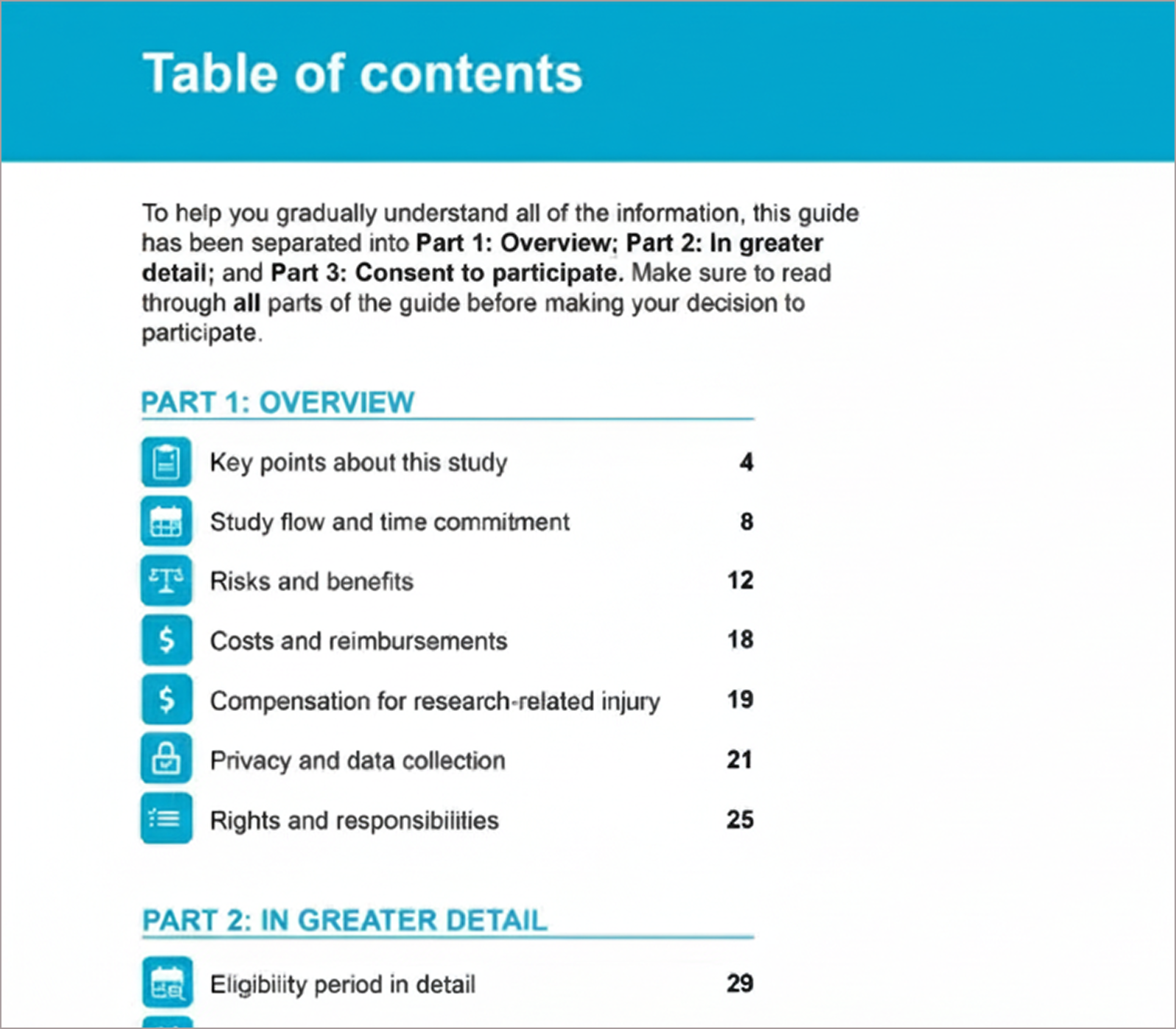
We visually formatted a table of contents to help the reader navigate information in a manner more intuitive to them. While all key regulatory requirements for informed consent are provided, the tiered delivery of information gives the readers autonomy to choose when to look deeper into a topic.

Enable Patient Learning
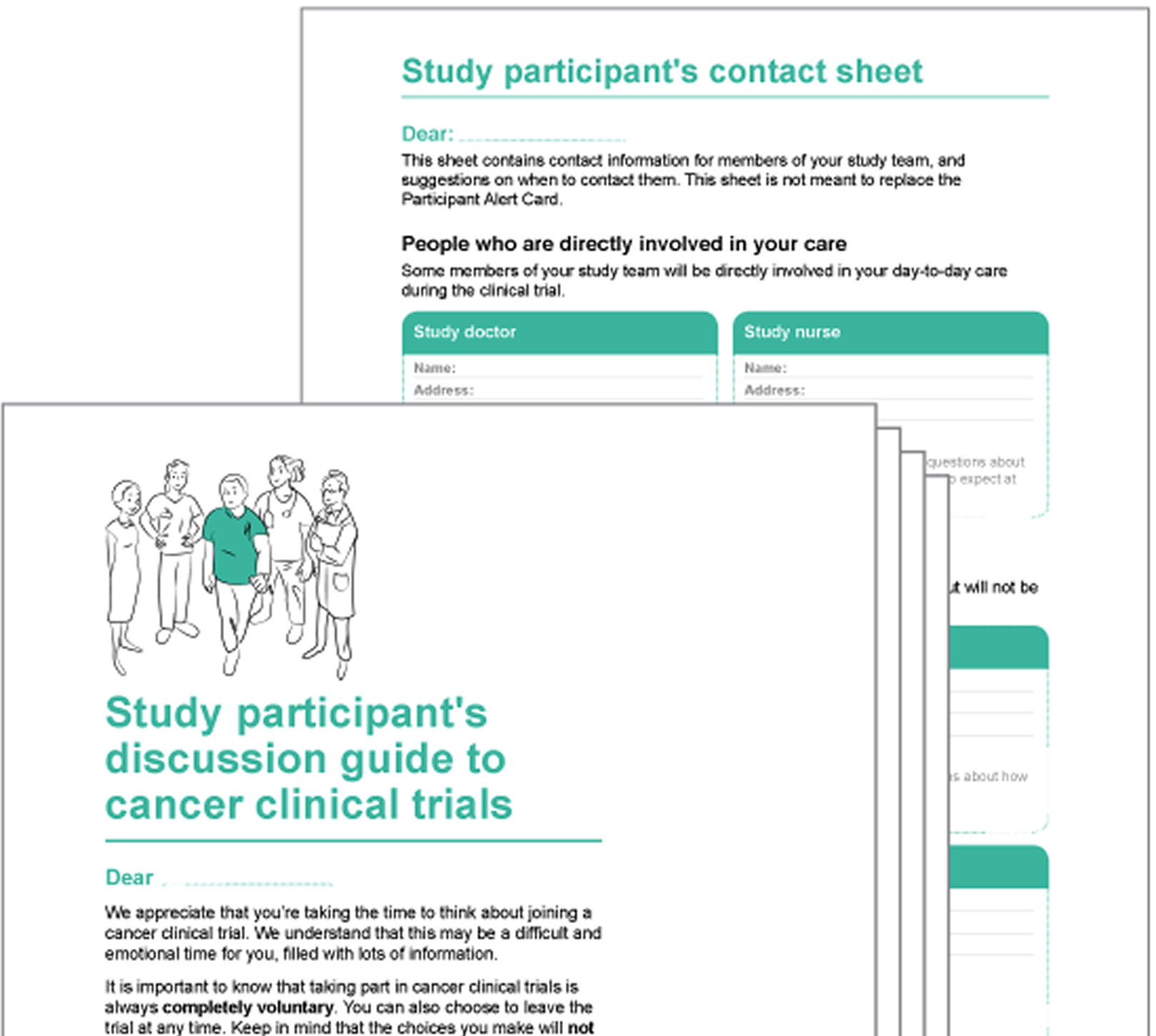
We created support materials to show how the ICF fits within the broader clinical trial process.
The “Study participant’s discussion guide” gives background on cancer clinical trials and helps participants know what questions to ask.
The “Study participant’s contact sheet” outlines the study team and identifies the people directly or indirectly involved in the participant’s care.